Cases.gg License Explained

Search "Cases.gg license" and you'll find confident claims in every direction. We went to the source: the Cases.gg terms of service. Here's what they say, what they don't, and why it matters if something goes wrong.
What the terms actually say
The terms name the operator as CGG Entertainment Ltd (Cyprus, HE439425) and a US payments company, CasesGG US LLC (Delaware). They set Cyprus law as the governing law. What they don't do is name a gambling licence or regulator.
Some affiliate pages mention a Curaçao licence number. We couldn't verify it in any official Cases.gg document, so we treat it as unconfirmed.
How the sweepstakes model works
Rather than operating as a licensed casino, Cases.gg's US setup uses a sweepstakes structure with two currencies:
- Gold Coins, which you can buy and play with but can't redeem.
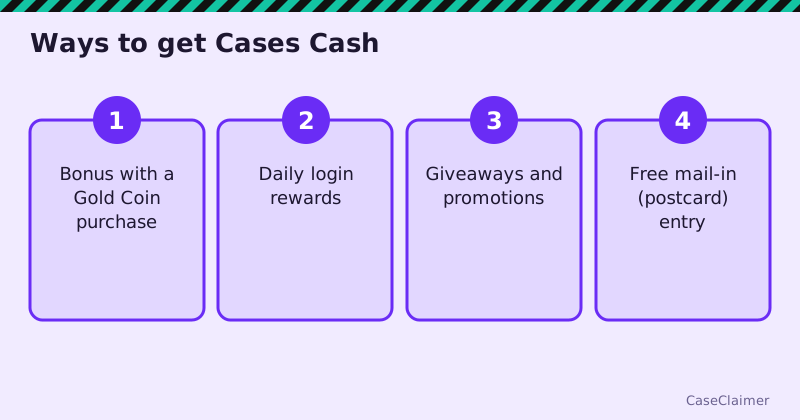
- Cases Cash, which you can't buy. It arrives as a bonus with Gold Coin purchases, as daily rewards, through giveaways, or via a free postcard entry (called an "alternative method of entry", AMOE). Prizes won with Cases Cash can be redeemed.
Because there's a free way in and the redeemable currency isn't sold directly, US sweepstakes operators argue they aren't running gambling. That's why the model exists, and also why a handful of states (Idaho, Montana, Michigan, Nevada and Washington, for Cases.gg) are excluded.
What this means for you
1. No regulator to complain to. With a licensed casino you can usually escalate a dispute to a regulator or an approved dispute service. Here you rely on the operator's support and, ultimately, Cyprus law.
2. Rules are set by the operator. Redemption limits, KYC requirements and processing times come from the terms, and the operator can change them.
3. The maths is unchanged. You're still paying for random outcomes. Third-party reviews put the house edge around 10% on boxes, battles and the upgrader and about 6.5% on crash; we couldn't confirm these figures officially.
How it compares with other box sites
Most CS2 case sites and mystery box sites run on a Curaçao licence, a sweepstakes model or no clear licence at all. Fully regulated options for this kind of product barely exist. So the missing licence isn't unusual for the category. It's a reason to keep deposits small and test a redemption early, not necessarily a reason to call it a scam.
A sensible way to approach it
- Start with the free welcome cases.
- If you buy, keep it small and treat the money as spent.
- Do a small redemption early to see how the process works for you.
- Keep screenshots of purchases and support chats in case of a dispute.